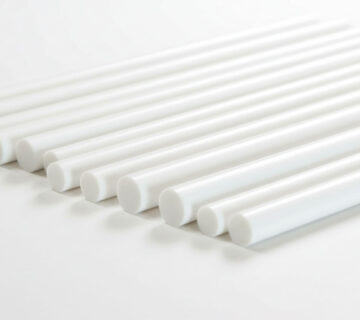

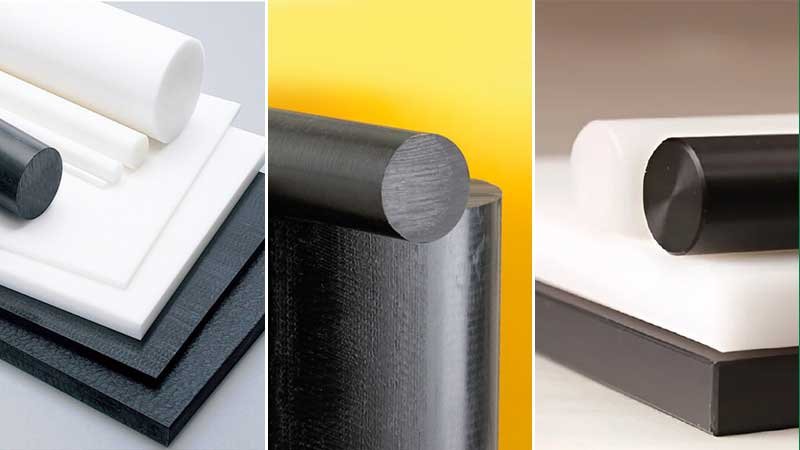
POM (Polyoxymethylene) is one of the most important engineering plastics used across a wide range of modern industrial applications, thanks to its excellent mechanical properties and ability to perform reliably under demanding operating conditions. Al Sharq for Metals and Industrial Supplies offers a comprehensive range of POM Sheets and Rods designed to meet the needs of manufacturing facilities and engineering workshops, ensuring high quality, durability, and dependable performance across various industries.
Table of Contents:
- Why Is POM One of the Most Important Engineering Plastics in Industry?
- Applications of POM in Machining and Various Industrial Sectors
- POM vs. Nylon: Key Differences and When to Use Each Material
- How to Choose the Right POM Material for Industrial Applications
Why Is POM One of the Most Important Engineering Plastics in Industry?
POM (Polyoxymethylene), also known as Acetal, is one of the most widely used engineering plastics across modern industrial sectors. Its popularity stems from a unique combination of mechanical and physical properties that make it ideal for applications requiring precision, durability, and wear resistance. POM offers high stiffness, excellent strength, and the ability to withstand repeated loads while maintaining dimensional stability under continuous operating conditions, making it an outstanding choice for manufacturing precision-engineered components.
POM is available as POM Sheets and Rods, allowing manufacturers and machining workshops to select the most suitable material format for their specific production requirements. One of its key advantages is its low moisture absorption rate compared to many other engineering plastics, helping maintain product performance and dimensional accuracy over extended periods. In addition, Polyoxymethylene (POM) features a low coefficient of friction and excellent wear resistance, which enhances the efficiency of moving parts and reduces maintenance requirements.
For these reasons, POM is widely used in the production of gears, bearings, rollers, conveyor system components, and various machinery parts on industrial production lines. POM Sheets and Rods provide a cost-effective and practical solution for projects that require reliable performance, long service life, and ease of machining without compromising quality.
Technical data published by DuPont also highlights the importance of selecting the right engineering materials based on mechanical performance requirements and wear resistance in demanding industrial applications.
Applications of POM in Mechanical Machining and Various Industries
POM is widely used in industrial applications that require an optimal combination of strength, lightweight performance, and low friction. One of the most common uses of Polyoxymethylene (POM) in mechanical machining is the production of precision gears, bearings, rollers, and components for automated production lines. Engineering-grade POM rods are also extensively utilized to manufacture custom spare parts and technical components that demand high dimensional accuracy and excellent resistance to repeated mechanical loads, making them a preferred choice for factories and engineering workshops.
The applications of POM sheets extend beyond moving parts and mechanical assemblies. They are also used in the production of industrial bases, insulating components, and parts exposed to moisture or certain chemicals during operation. Thanks to its durability, dimensional stability, and excellent machinability, POM remains one of the most versatile engineering plastics across a wide range of industrial sectors.
Some of the most common applications of POM:
- Packaging Machine Gears: POM is widely used due to its high precision, dimensional stability, and excellent wear resistance.
- Conveyor Belt Bushings: POM provides smooth operation, reduced friction, and an extended service life.
- Conveyor Sprockets (Star Wheels): POM is preferred for its durability, dimensional accuracy, and resistance to wear during continuous operation.
- Crane Sheaves and Pulleys: PA6 (Nylon) is commonly used because of its ability to withstand heavy loads and mechanical stress.
- Heavy-Duty Conveyor Rollers: PA6 is often selected for its superior strength, impact resistance, and excellent wear performance.
- Impact-Resistant Spare Parts: PA6 is ideal for components exposed to repeated shocks and high mechanical stresses due to its toughness and durability.
Selecting the right engineering plastic—whether POM or PA6—in terms of material grade, dimensions, and technical specifications is essential for maximizing production efficiency and achieving optimal performance in modern manufacturing environments.
In addition, international standards published by the International Organization for Standardization (ISO) play a vital role in establishing quality benchmarks for industrial materials and ensuring compliance with global performance, safety, and reliability requirements.
POM vs. Nylon (PA6): Key Differences and When to Use Each Material
When comparing POM (Polyoxymethylene) and PA6 (Nylon 6), it becomes clear that each material offers unique characteristics that make it suitable for specific industrial applications. Understanding the differences between POM and Nylon is essential for engineers, technicians, and manufacturers when selecting the most appropriate material for a particular project.
The following table highlights the key differences between POM and PA6:
| PA6 (Nylon 6) | POM (Polyoxymethylene) | Property |
| Good | Excellent | Dimensional Stability |
| Relatively High | Very Low | Moisture Absorption |
| Moderate | Low | Coefficient of Friction |
| Excellent | Excellent | Wear Resistance |
| Excellent | Good | Impact Resistance |
| Excellent | Excellent | Machinability |
| Good | Very Good | Chemical Resistance |
| Approximately 1.14 g/cm³ | Approximately 1.41 g/cm³ | Specific Gravity |
| Slightly Higher | Lower | Operating Noise |
| Generally Lower | Generally Higher | Market Price |
| Heavy-duty rollers, bushings, and impact-resistant parts | Precision gears, bushings, and moving components | Best Applications |
When Should You Choose POM and When Should You Choose Nylon (PA6)?
POM (Polyoxymethylene) is the preferred choice when your application requires:
- Precision gears and high-accuracy mechanical components.
- Bushings operating at high speeds.
- Parts that require excellent dimensional stability.
- Applications exposed to moisture, water, or humid environments.
- Components that benefit from low friction and smooth operation.
PA6 (Nylon 6) is the better option when your application requires:
- High impact resistance and the ability to withstand heavy loads.
- Large rollers, pulleys, and heavy-duty moving parts.
- Mechanical components where ultra-high dimensional accuracy is not critical.
- A more cost-effective solution compared to POM.
Summary
- If precision, dimensional stability, low friction, and smooth performance are your top priorities, POM is generally the best choice.
- If toughness, impact resistance, load-bearing capacity, and cost efficiency are more important, PA6 (Nylon) is typically the better option.
For additional technical comparisons and engineering data, Engineering ToolBox provides a wide range of engineering resources that can help manufacturers and engineers evaluate material properties and make informed purchasing and design decisions.
How to Choose the Right POM Material for Industrial Applications and Its Prices in Egypt
Selecting the appropriate POM (Polyoxymethylene) material depends on a set of technical factors that directly affect performance efficiency and the service life of industrial components. The most important considerations include the nature of the application, the load applied to the part, operating speed, and the expected level of friction during use. Therefore, understanding how to choose the right POM material for industrial applications is essential to ensure optimal results and high reliability in production lines.
It is also important to select the correct dimensions of POM sheets and rods in accordance with engineering design requirements and manufacturing processes, whether machining involves turning, milling, or precision shaping.
When purchasing POM material, it is recommended to carefully review technical specifications such as density, wear resistance, mechanical strength, and dimensional stability. These factors play a crucial role in determining whether the material is suitable for the intended application. Al Sharq for Metals and Industrial Supplies offers a wide range of POM Sheets and Rods with high quality and standardized specifications to meet the needs of various industrial sectors, along with technical support to help customers select the most suitable material and achieve the best possible operational performance.
Contact us now to get a quotation for bulk orders.
International standards developed by ASTM International also play a key role in evaluating the mechanical and physical properties of engineering materials, helping engineers choose the most appropriate material based on each industrial application’s requirements.
Conclusion:
In conclusion, POM remains one of the most widely used engineering thermoplastics across various industrial sectors, thanks to its high mechanical strength, excellent dimensional stability, and strong resistance to wear and friction. These properties have made POM (Polyoxymethylene) a preferred choice for engineers and manufacturers seeking a material that combines reliable performance with easy machinability and fabrication. Whether used in the production of gears, bearings, rollers, or various precision mechanical components, POM offers practical and cost-effective solutions that help improve equipment efficiency and reduce long-term maintenance costs.
Moreover, the availability of POM in the form of POM sheets and rods provides manufacturers and workshops with great flexibility in executing a wide range of industrial projects according to required specifications. With the diversity of applications and varying operational demands, selecting the right material and a reliable supplier becomes a key factor in achieving optimal results. That is why Al Sharq for Metals and Industrial Supplies is committed to providing high-quality POM Sheets and Rods with standardized specifications that meet the needs of different industrial sectors.
Frequently Asked Questions:
What is POM (Polyoxymethylene)?
POM, also known as polyacetal, is a high-performance engineering plastic widely used in industrial applications that require strength, durability, and precision. It offers excellent resistance to wear and friction, high dimensional stability during operation, and is easy to machine using turning and milling processes. POM is available in various sizes in the form of sheets and rods to meet the needs of different industries.
Contact Al Sharq for Metals and Industrial Supplies to get the best POM sheets and rods suitable for your industrial application.
What are its main industrial applications?
POM is used in the manufacturing of gears, bearings, rollers, bushings, and components for automated production lines. It is also widely applied in food processing, packaging, and mechanical engineering industries. It is preferred in applications requiring low friction, long service life, and stable dimensional performance.
Request a technical consultation from Al Sharq for Metals and Industrial Supplies to select the right POM grade for your factory needs.
What is the difference between POM and PTFE (Teflon)?
The main difference is that POM offers higher mechanical strength and rigidity, making it suitable for load-bearing and continuously moving parts such as gears and bearings. PTFE (Teflon), on the other hand, provides superior chemical resistance and an extremely low coefficient of friction, making it ideal for applications exposed to chemicals or extreme temperatures. The choice depends on the operating conditions and application requirements.
Contact us to find the most suitable material for your project between POM and PTFE.
Is POM suitable for gear manufacturing?
Yes, POM is one of the best materials for gear production due to its high wear resistance and ability to withstand repeated mechanical loads. It also features low friction and reduced operating noise compared to many other materials, helping improve machine efficiency and extend service life. Explore our Products.
How do I choose the right size?
Selecting the appropriate size of POM sheets or rods depends on the application and engineering design requirements. Factors such as thickness, rod diameter, expected load, and operating conditions must be considered. It is also recommended to review technical specifications to ensure optimal performance and efficiency.
Contact Al Sharq for Metals and Industrial Supplies for assistance in choosing the right POM sheet and rod dimensions for your project . Explore our Engineering plastics products.